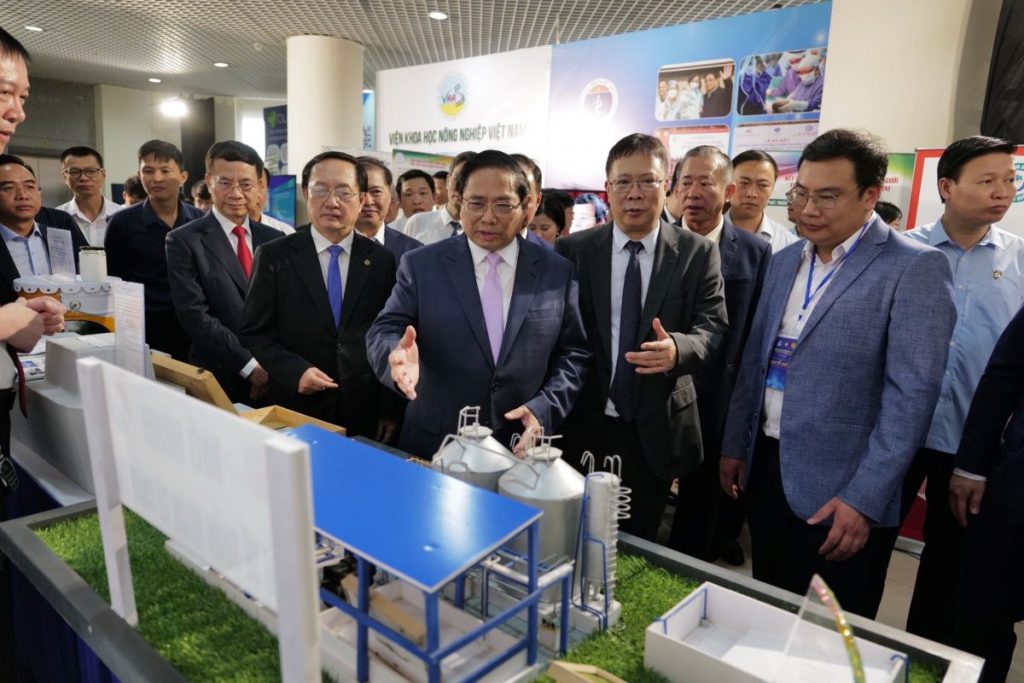



On the morning of August 28, 2025, the National Exhibition on Vietnam’s Achievements officially opened at the National Exhibition Center in Dong Anh Commune, Hanoi, to celebrate the 80th anniversary of the National Day. As the country’s leading institution in scientific research, the Vietnam Academy of Science and Technology (VAST) brought to the event a showcase of its most outstanding and innovative technologies. The VAST exhibition booth was honored to welcome Deputy Prime Minister and Minister of Foreign Affairs Bui Thanh Son, along with leaders from various ministries and government agencies.
This exhibition is a major political and cultural event, not only providing an opportunity to look back on 80 years of Vietnam’s proud and heroic history, but also reaffirming the country’s stature, position, and aspiration for sustainable development in the future. It highlights the leadership of the Communist Party, the governance of the State, and the solidarity and creativity of the Vietnamese people in the nation-building and development process.
The exhibition is held from August 28 to September 5, 2025.
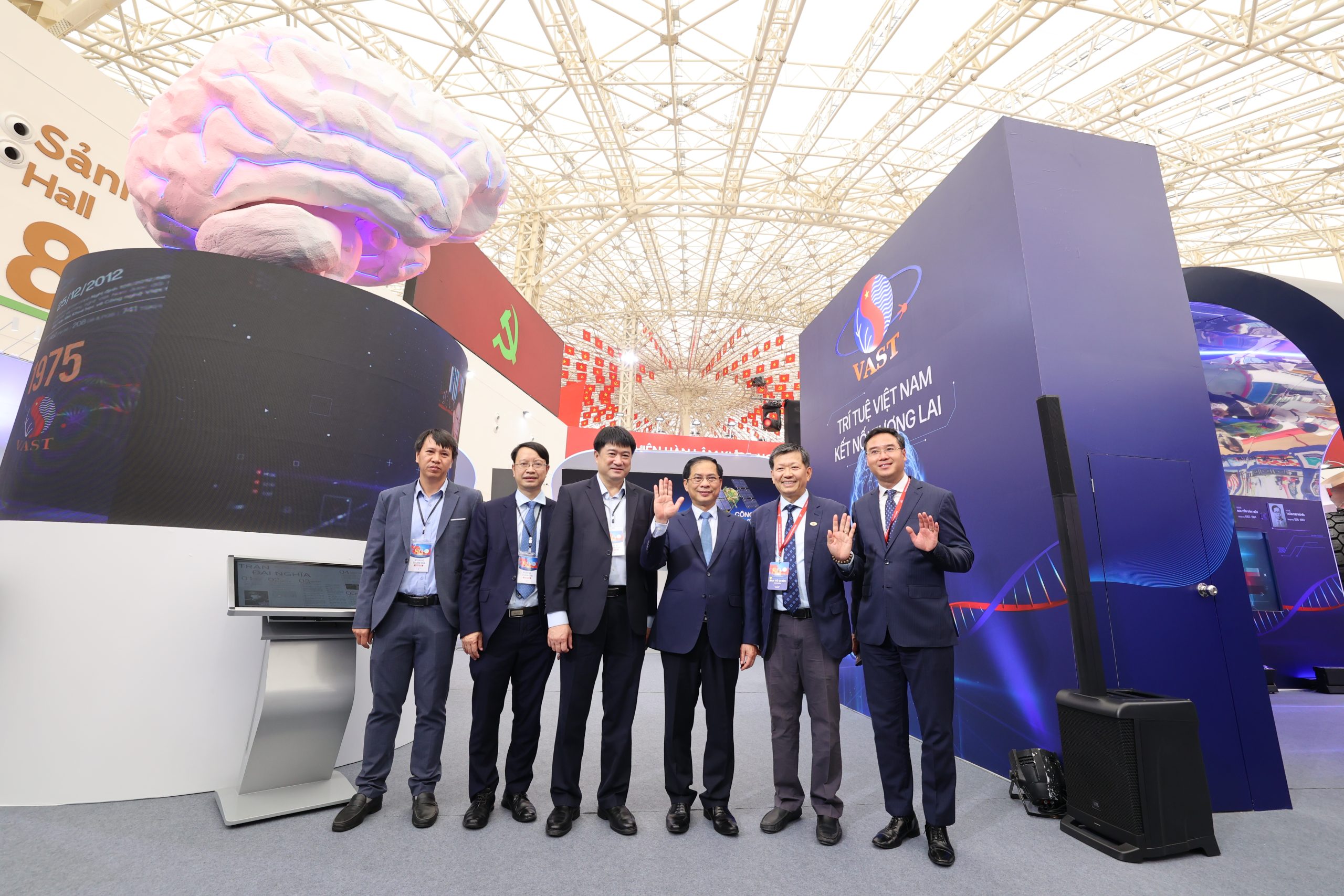
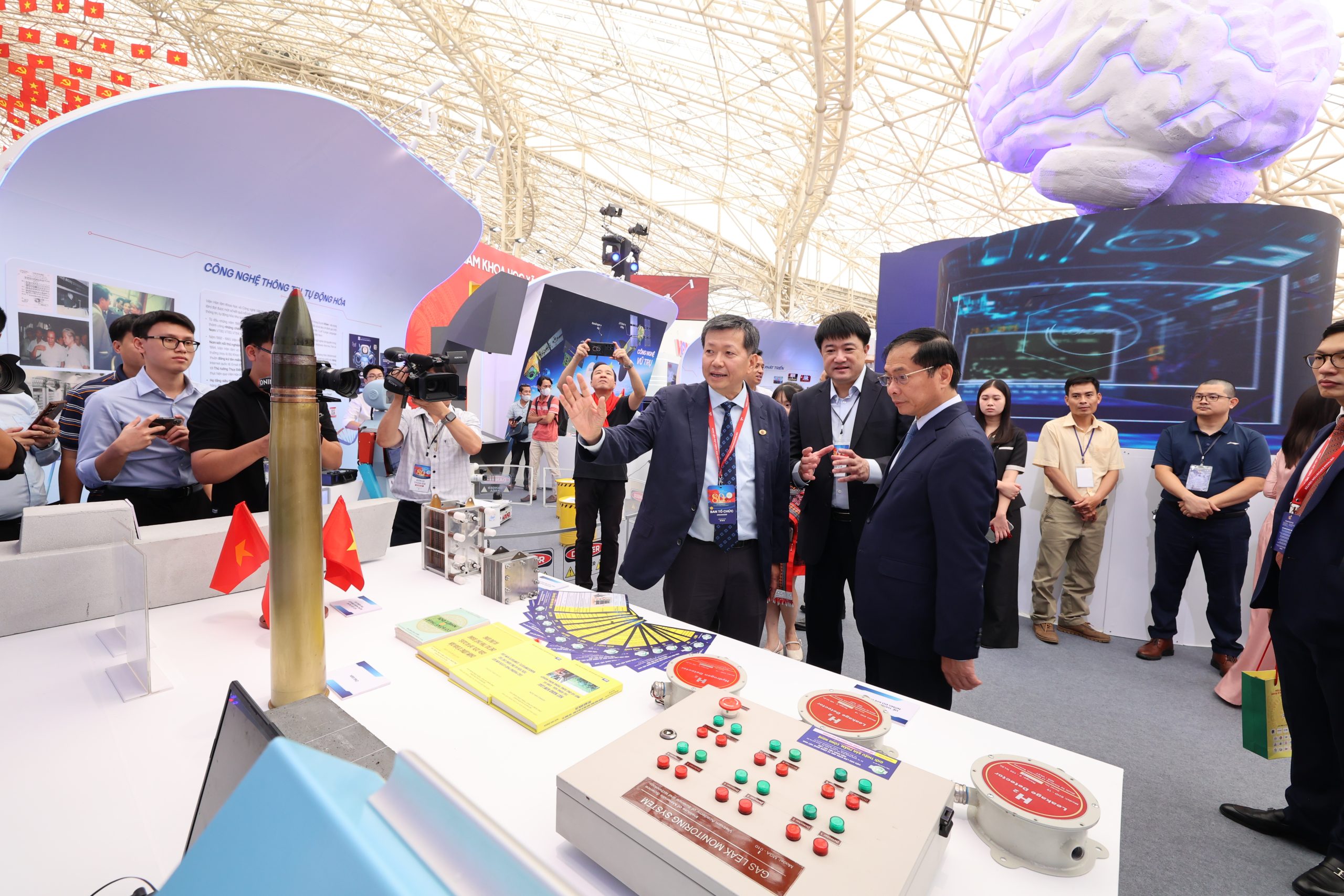
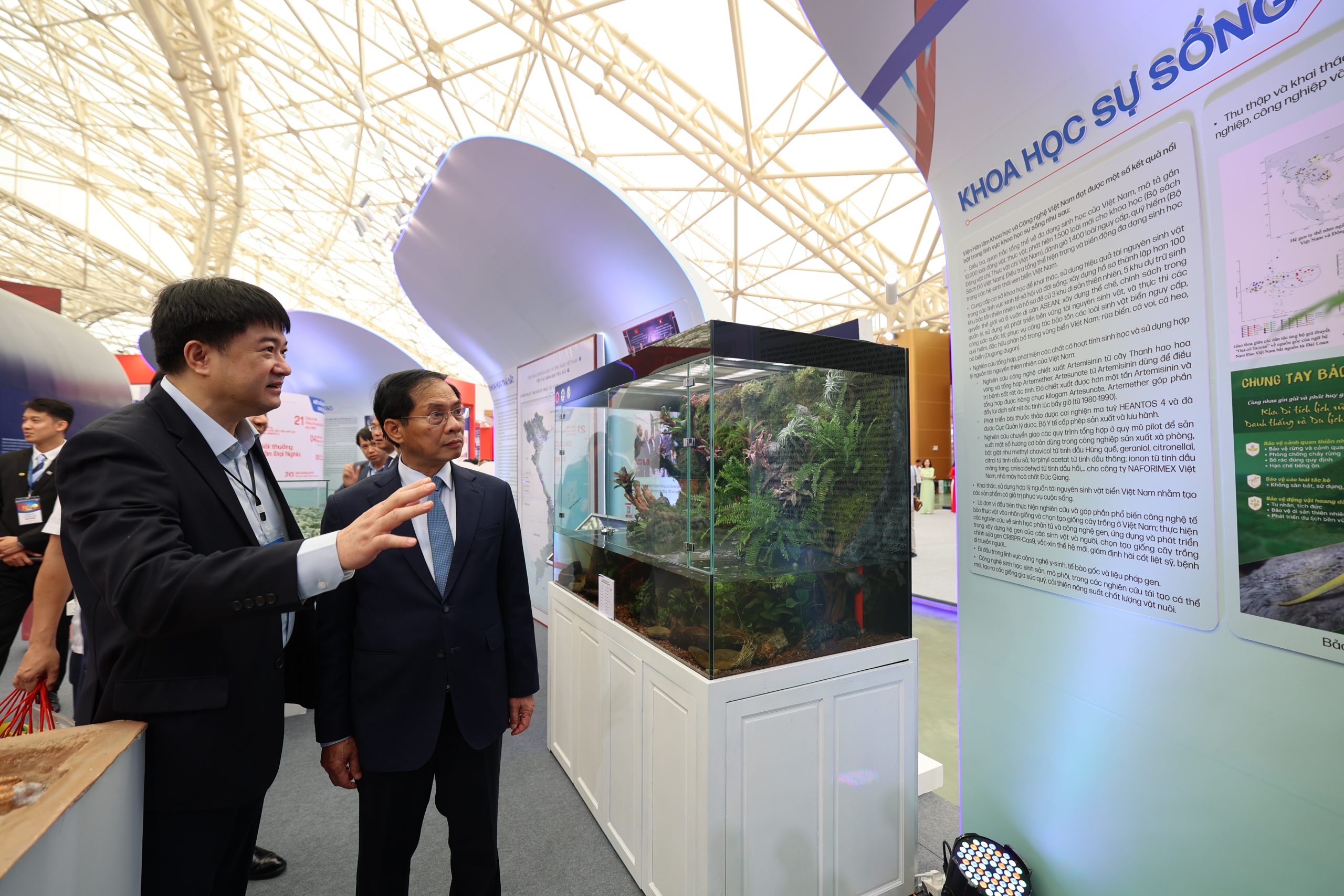
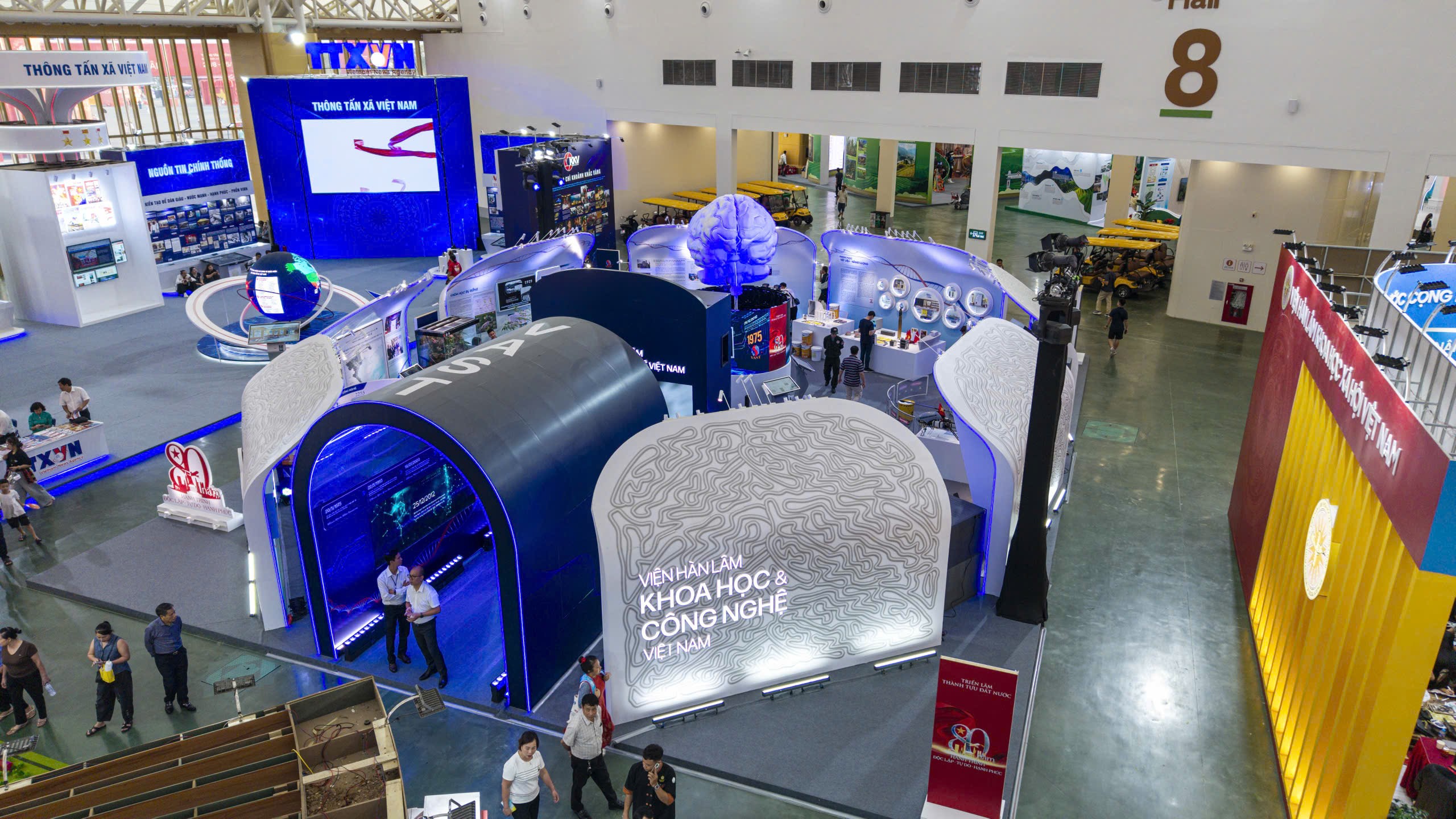
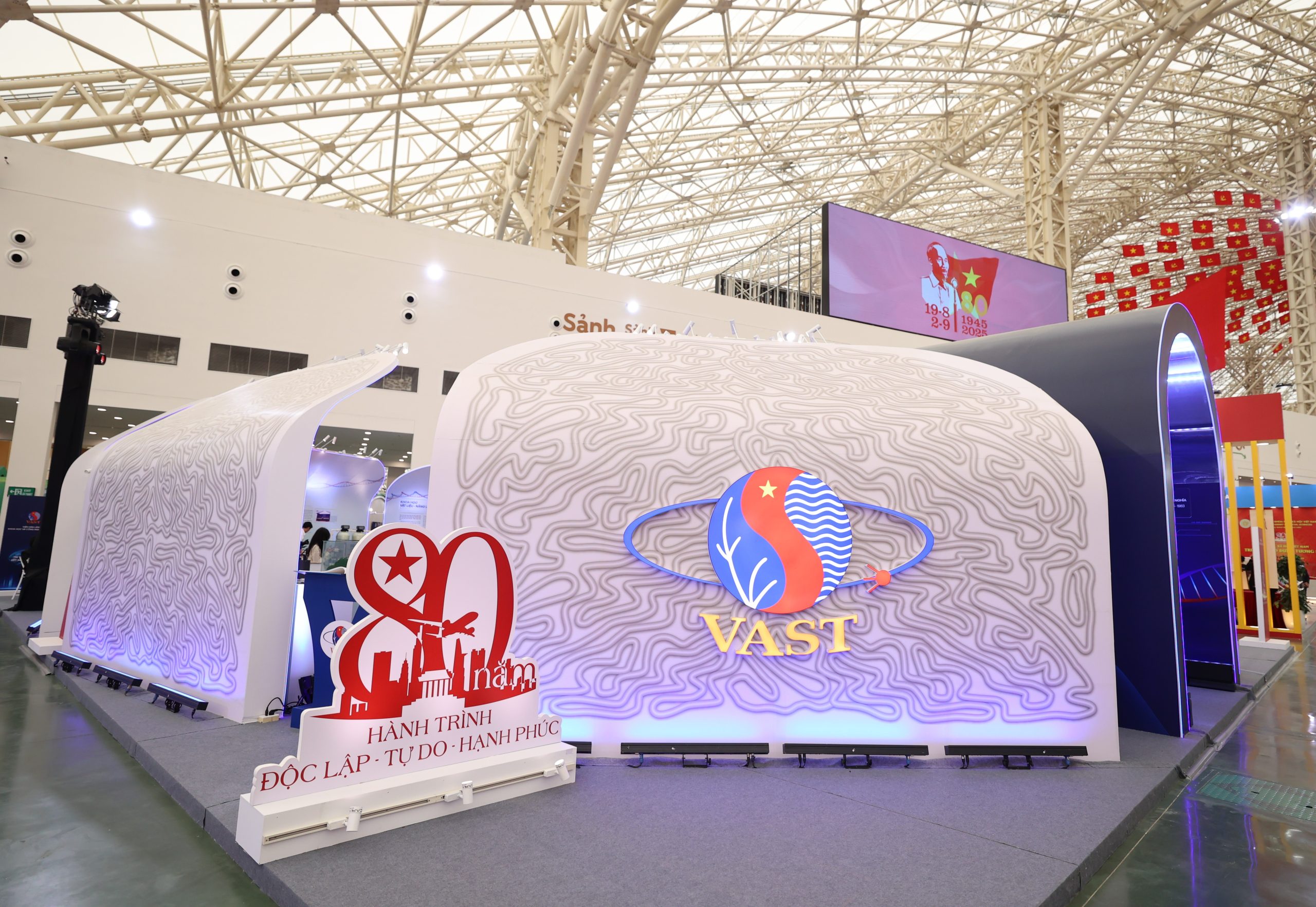
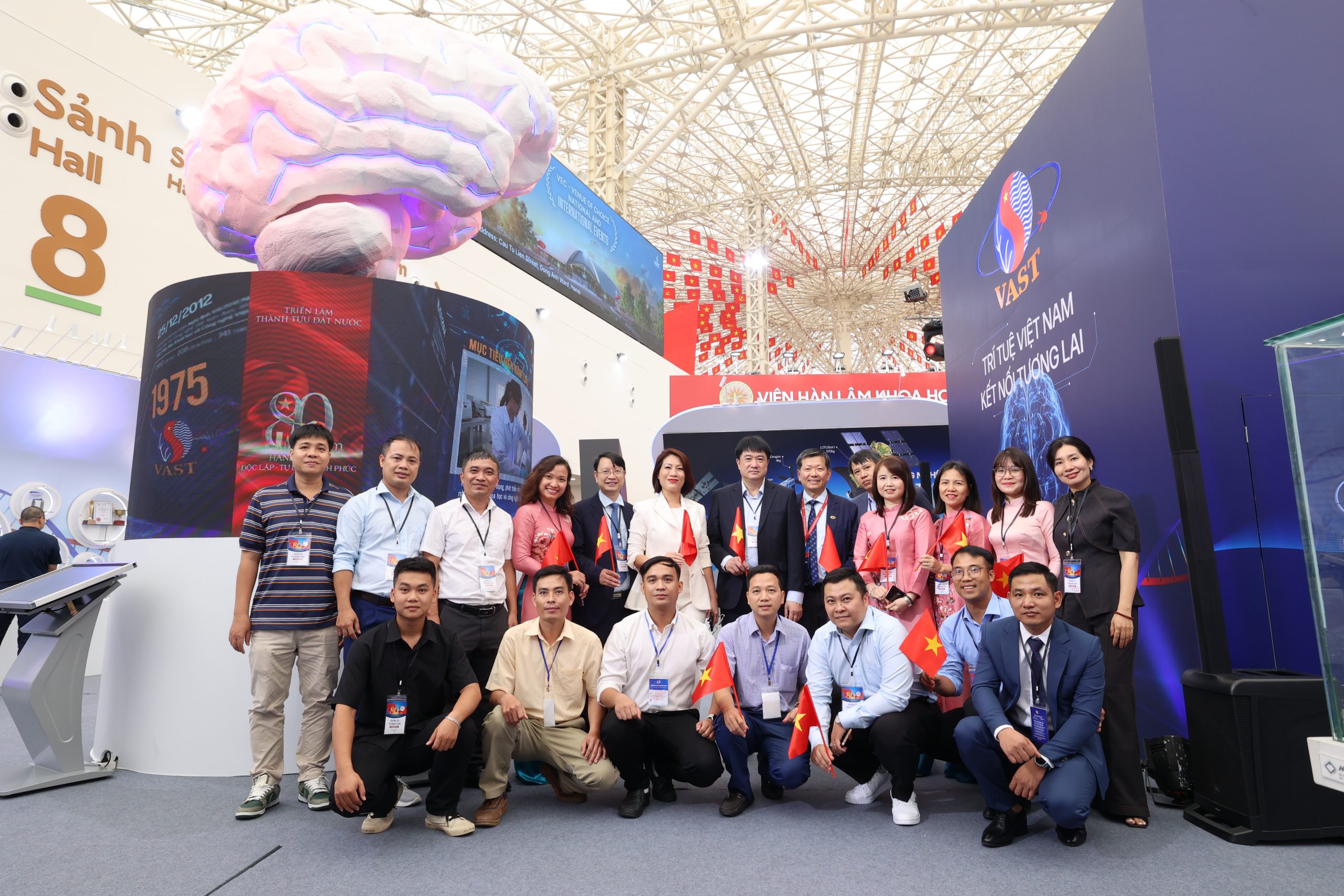
Deputy Prime Minister and Minister of Foreign Affairs Bui Thanh Son visited the exhibition booth of the Vietnam Academy of Science and Technology (VAST) at the National Exhibition on Vietnam’s Achievements. Taking inspiration from the image of the human brain—the command center of all human activity where ideas are formed, actions are guided, and breakthroughs in civilization are born—the exhibition space vividly symbolizes the role of intelligence and creativity in national development. Throughout history, the wisdom of the Vietnamese people has enabled the nation to overcome immense challenges and continuously innovate for progress. Designed in the shape of a brain, the VAST exhibition space is divided into several “lobes,” each representing a key field of natural science: basic research and training; earth sciences; life sciences; materials and energy technology; environmental technology; information technology and automation; and space technology, culminating in cooperation for development. Each section not only carries symbolic meaning but also tells real stories of scientific achievement, reflecting the ingenuity and intellect of Vietnam. The design presents a harmonious blend of science and art, offering visitors a captivating and meaningful experience.
The Tunnel of History
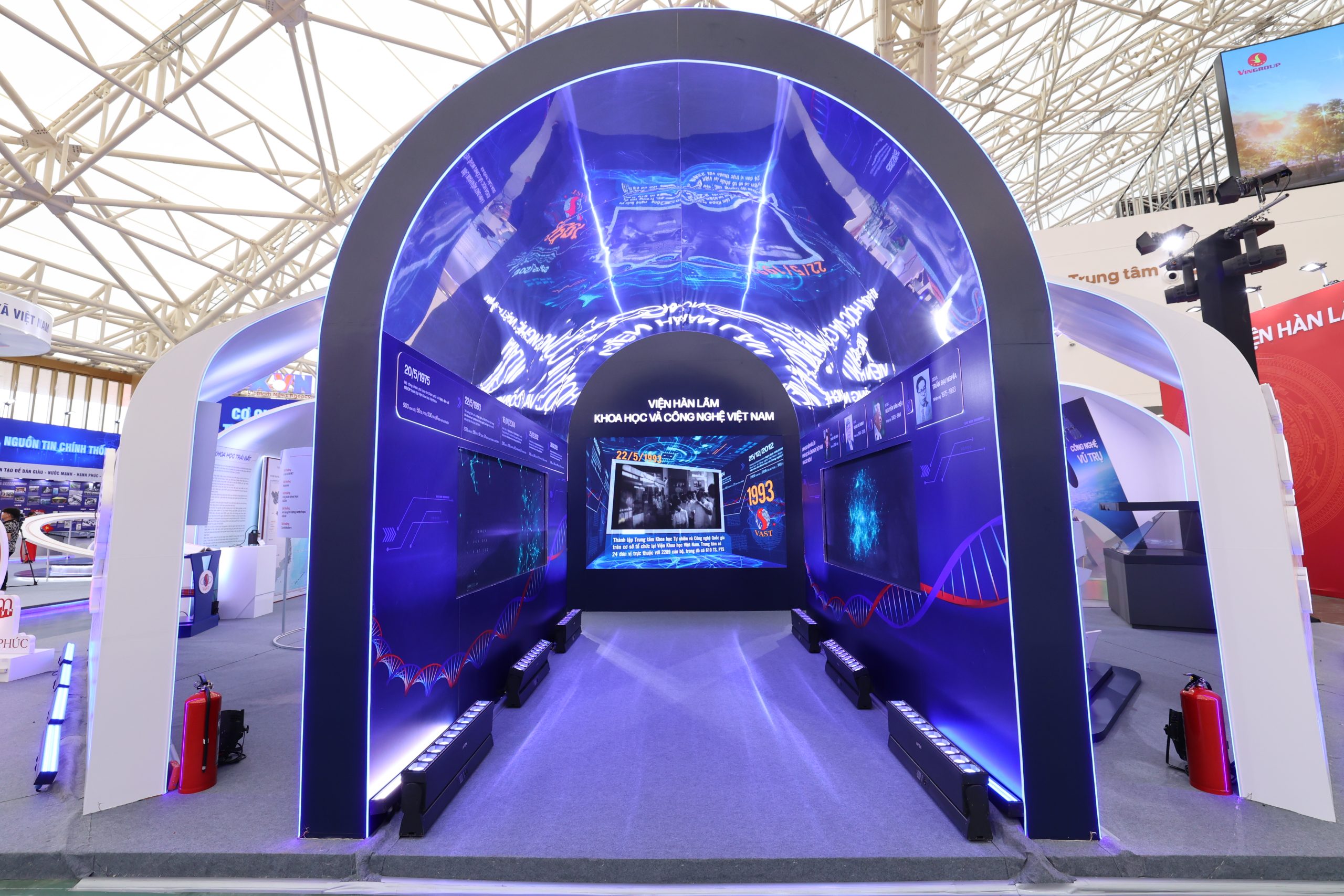
The exhibition of the Vietnam Academy of Science and Technology (VAST) begins with the “Tunnel of History”, which provides an overview of the Academy’s 50-year journey of formation and development. As the nation’s leading scientific research institution, VAST is entrusted with conducting basic and applied research, as well as implementing scientific and technological advancements to serve the country’s sustainable development.
On May 20, 1975, the Council of Government (now the Government) issued Decree No. 118/CP, officially establishing the Vietnam Academy of Science. On May 22, 1993, the Prime Minister issued Decree No. 24/CP, reorganizing the Vietnam Academy of Science into the National Center for Natural Science and Technology. Subsequently, on January 16, 2004, under Decree No. 27/2004/NĐ-CP, the Center was renamed the Vietnam Academy of Science and Technology. On December 25, 2012, the Government issued Decree No. 108/2012/NĐ-CP, officially changing its name to the Vietnam Academy of Science and Technology (VAST). Most recently, on February 26, 2025, Decree No. 38/2025/NĐ-CP was issued, defining the functions, duties, authority, and organizational structure of the Academy.
Section: Basic Research and Training
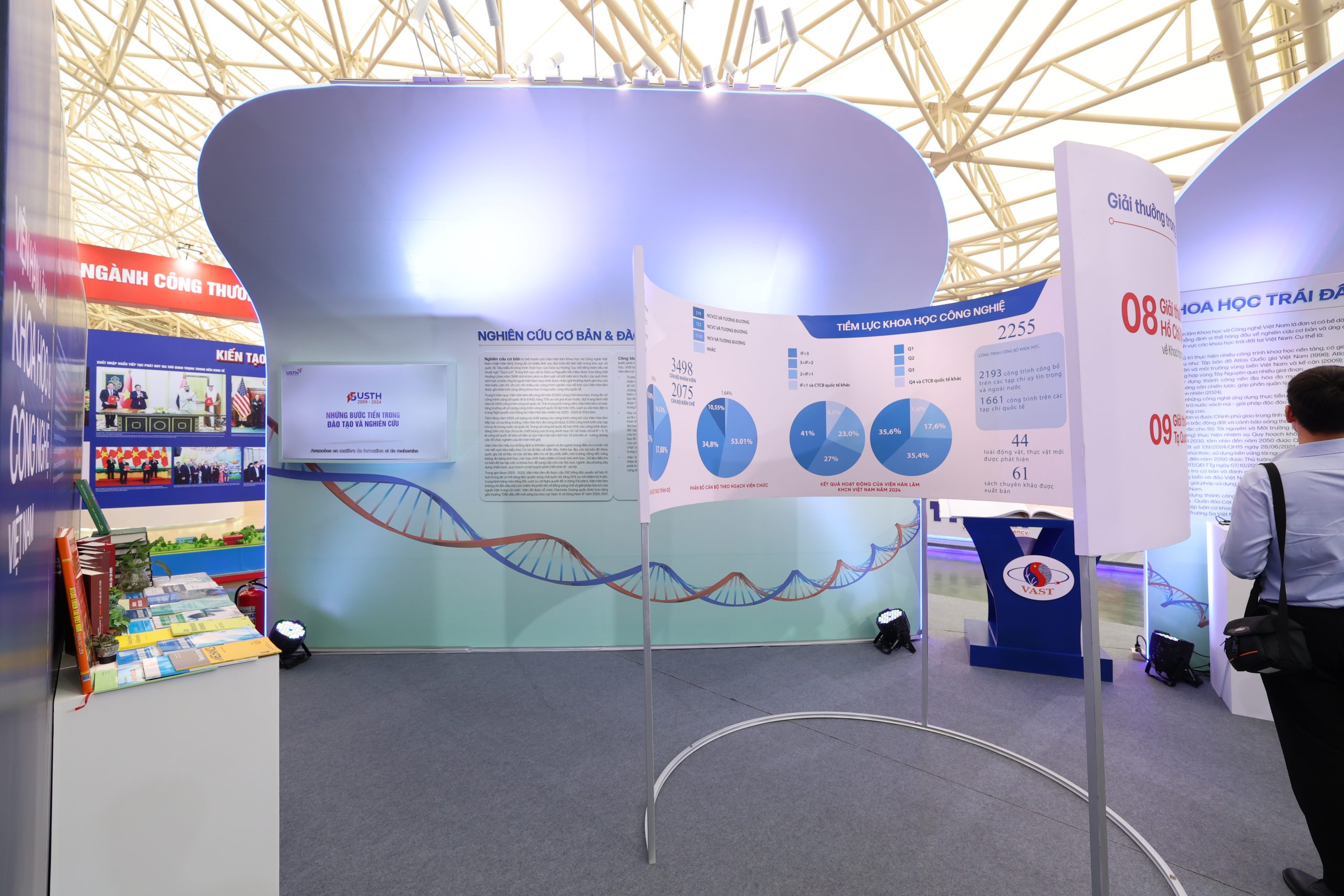
Basic Research
Basic research is one of the core strengths of the Vietnam Academy of Science and Technology (VAST), with many disciplines reaching regional and international standards of excellence. Among its most renowned achievements is the work of Professor Hoàng Tụy, whose mathematical contribution introduced the globally recognized term “Tụy’s cut.” In the field of physics, Professor Nguyễn Văn Hiệu was awarded the Lenin Prize in 1986 for his discovery of the law of scale invariance in elementary particle production — making him the only Vietnamese scientist ever to receive this prestigious award from the former Soviet Union.
Over the past five years, VAST has published more than 12,000 scientific papers, including 8,400 international publications, marking a 73% increase compared to the previous period — an average of 1,650 international papers per year. Notable outcomes include the creation of databases on marine and island territories, continental shelf studies, national Atlas maps, and extensive datasets from geological, marine, environmental, seismic, energy, biodiversity, and bioactive natural compound investigations.
Between 2020 and 2025, the Academy was granted 292 intellectual property titles, including 9 international patents — a 52% increase compared to the previous term, and an average annual growth rate of 9%, surpassing the original target of 5% per year. VAST continues to lead the nation in the number of patents and utility solutions held by Vietnamese researchers. In recognition of its innovation leadership, Clarivate (UK) awarded VAST the “Innovation Leadership Award for South and Southeast Asia” in both 2020 and 2021.
The Academy’s high-quality human resource training has also made remarkable progress, with strong integration between education and scientific research. VAST currently operates three affiliated training institutions, including:
-
The University of Science and Technology of Hanoi (USTH), which proudly received international institutional accreditation from HCERES.
-
The Graduate University of Science and Technology (GUST), a leading postgraduate institution offering world-class research-oriented programs, leveraging the expertise of VAST’s scientists and its specialized laboratories to link research outcomes directly with teaching and practical application.
-
The Institute of Mathematics, recognized by The World Academy of Sciences (TWAS) as one of the 10 centers of excellence in developing countries, and one of only two Vietnamese institutions officially recognized and sponsored by UNESCO.
Section: Earth Sciences
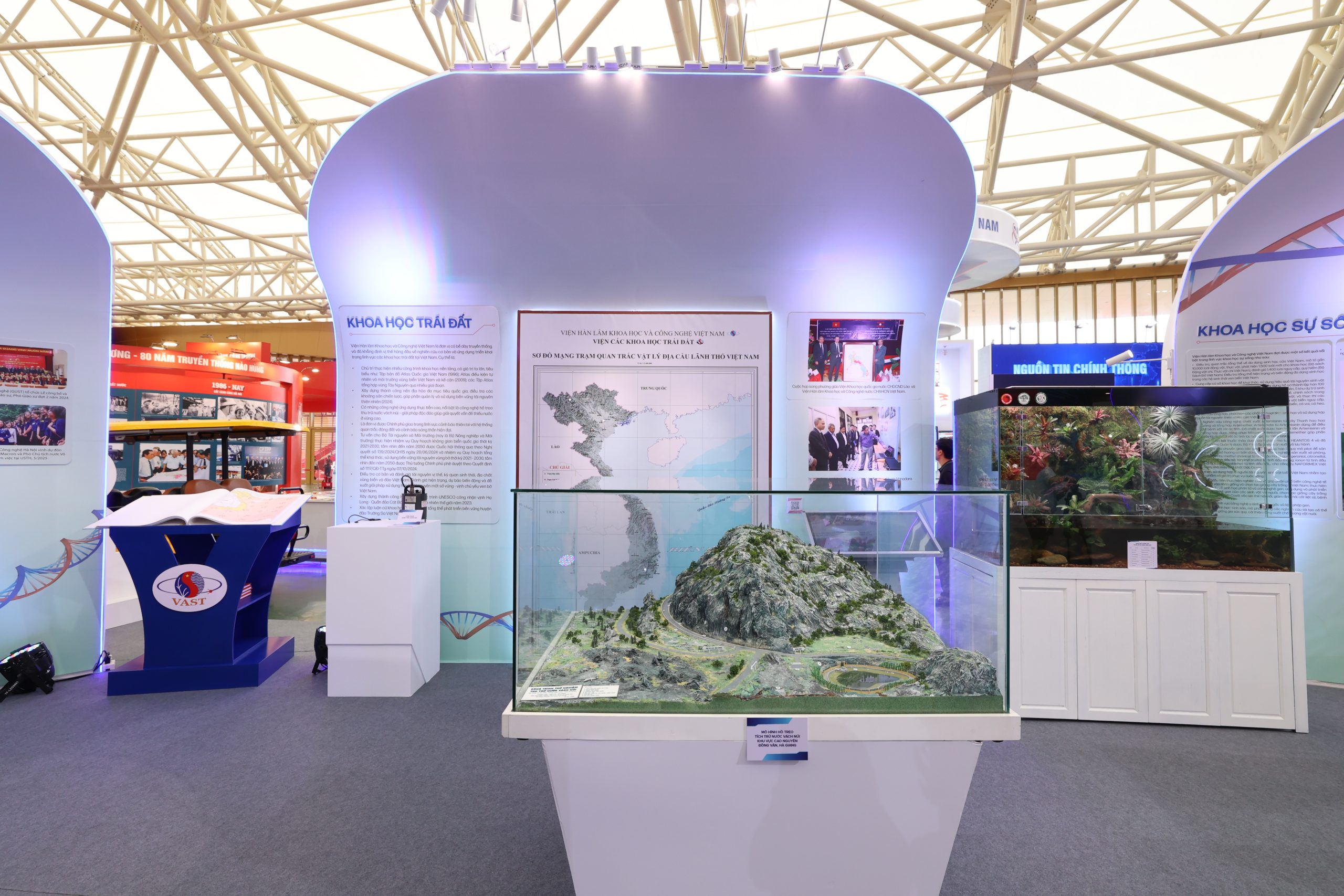
The Vietnam Academy of Science and Technology (VAST) has a long-standing tradition and has firmly established itself as the nation’s leading institution in both fundamental and applied research within the field of Earth sciences.
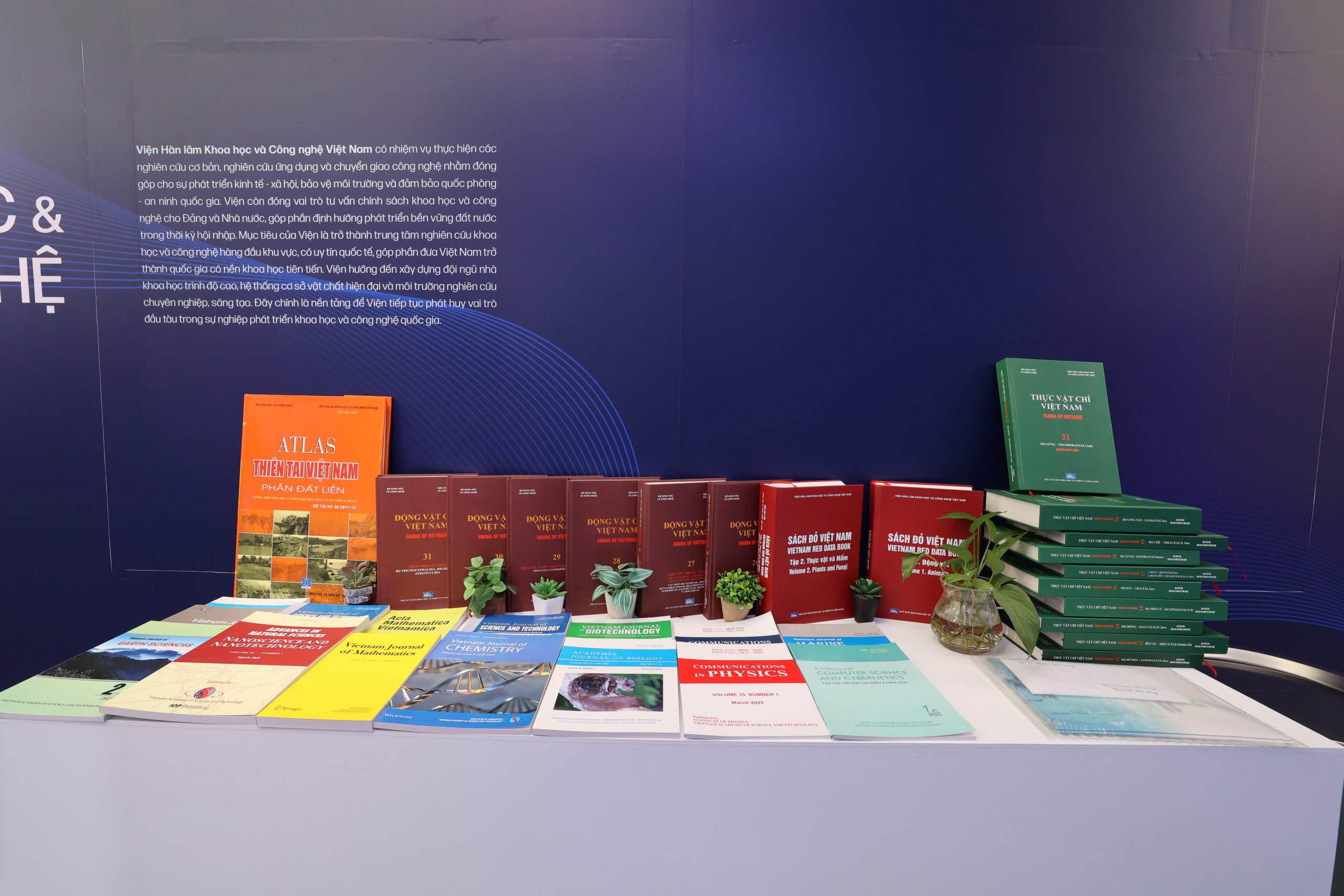
VAST has led numerous landmark scientific projects of great national significance, including the Vietnam National Atlas (1996), the Atlas of Natural Conditions and Marine Environment of Vietnam and Adjacent Areas (2009), and multiple editions of the Comprehensive Atlas of the Central Highlands across different periods.
The Academy successfully developed the National Multi-Purpose Geochemical Baseline, conducted strategic mineral investigations, and contributed to the sustainable management and utilization of natural resources (2024).
As the government-designated institution for natural disaster monitoring and warning, VAST operates Vietnam’s modern earthquake observation and tsunami warning network, playing a crucial role in national safety and disaster preparedness.
VAST also serves as a scientific advisor to the Ministry of Natural Resources and Environment (now the Ministry of Agriculture and Environment) in implementing major national planning initiatives, including:
-
The National Marine Spatial Planning for 2021–2030, with a Vision to 2050, approved by the National Assembly Resolution No. 139/2024/QH15 dated June 28, 2024; and
-
The Master Plan for Sustainable Exploitation and Utilization of Coastal Resources for 2021–2030, Vision to 2050, approved by the Prime Minister’s Decision No. 1117/QĐ-TTg dated October 7, 2024.
The Academy has conducted extensive fundamental surveys and assessments of Vietnam’s marine and island ecosystems, geological heritage, and natural landscapes; evaluated the status and projected changes of major coastal bays and gulfs; and proposed solutions for the sustainable use of marine and coastal resources.
A remarkable achievement is the technical dossier prepared by VAST, which successfully led to the UNESCO recognition of Ha Long Bay – Cat Ba Archipelago as a World Natural Heritage Site in 2023.
At the exhibition, the Earth Sciences section features highly practical technologies, including the mountain-hanging water reservoir system—an innovative solution for addressing water scarcity in highland areas—as well as earthquake monitoring and anti-seismic construction technologies that support national infrastructure safety.
Section: Life Sciences
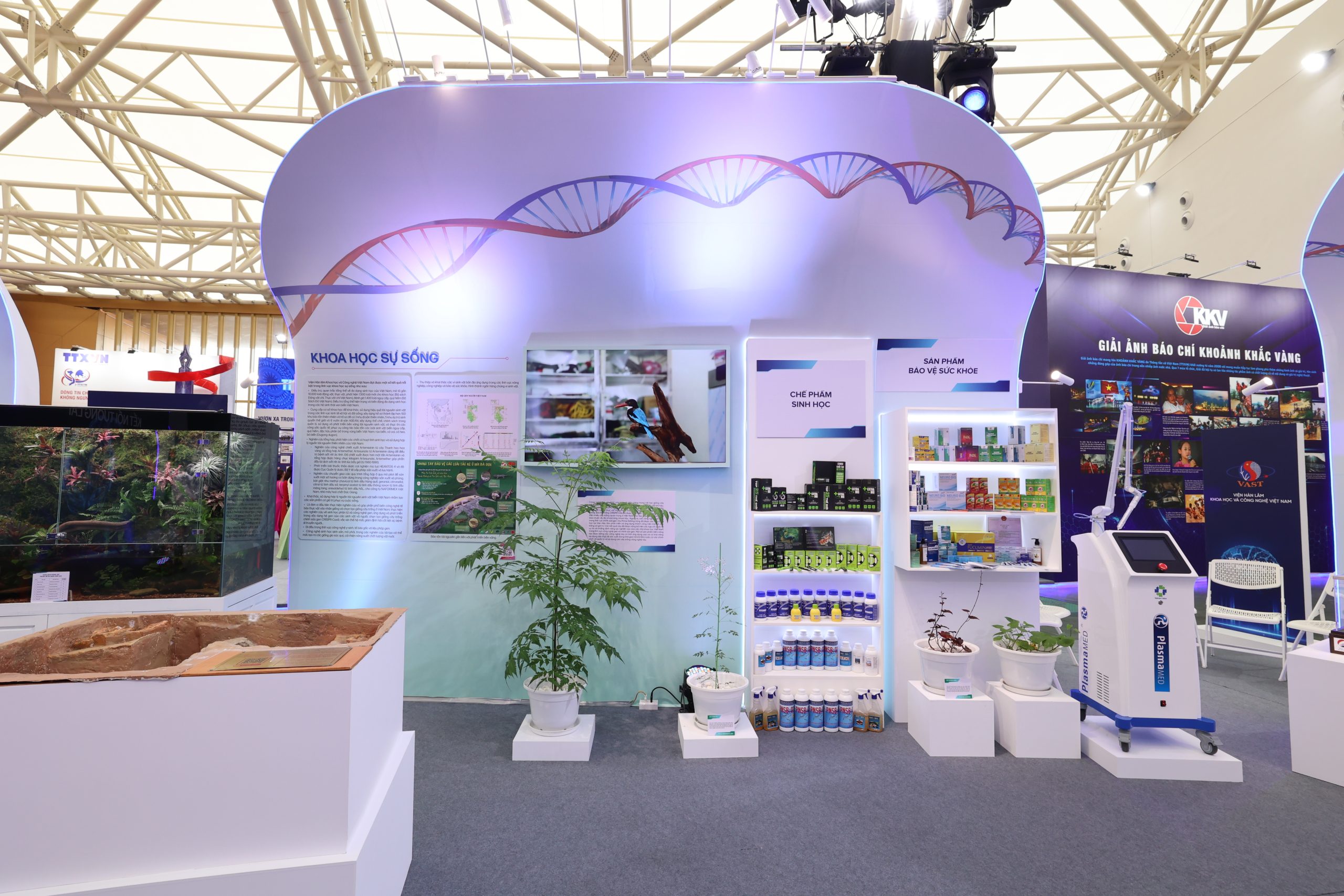
The Vietnam Academy of Science and Technology (VAST) has conducted comprehensive surveys and long-term monitoring of Vietnam’s biodiversity, describing nearly 10,000 species of animals and plants and discovering over 1,500 species new to science, documented in the monumental series Fauna of Vietnam and Flora of Vietnam. The Academy has also assessed 1,400 endangered and rare species for the Vietnam Red Data Book and carried out extensive evaluations of the status and dynamics of biodiversity in Vietnam’s coastal ecosystems.
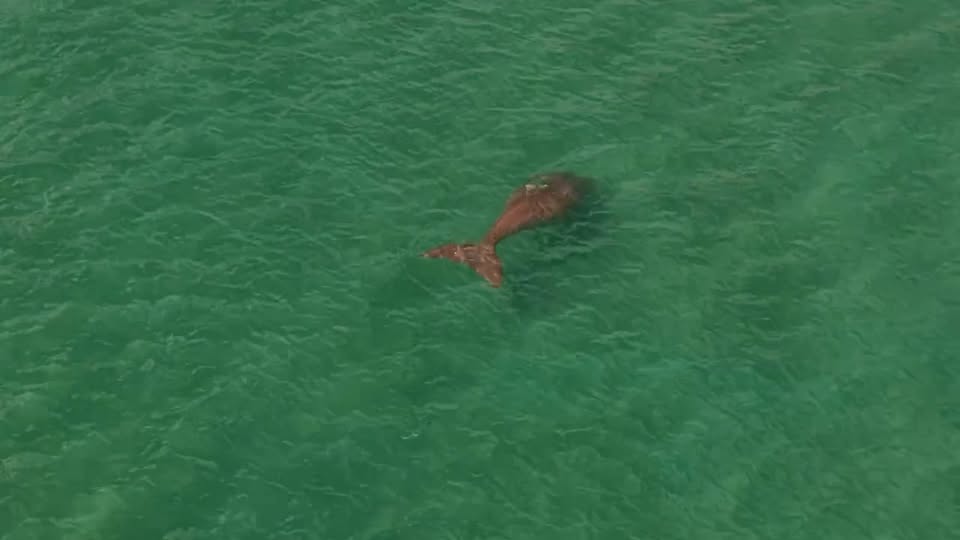
VAST’s research has provided critical scientific foundations for the sustainable utilization of biological resources in socio-economic development and daily life. The Academy has prepared dossiers for the establishment of over 100 nature reserves, as well as proposals for 3 World Natural Heritage Sites, 5 UNESCO Biosphere Reserves, and 6 ASEAN Heritage Parks. It has contributed to the development of national institutions and policies for managing, conserving, and sustainably developing biological resources and implementing international environmental conventions. These efforts also support the conservation of rare, endangered, and endemic marine species found in Vietnam’s waters, such as sea turtles, whales, dolphins, and dugongs (Dugong dugon).
VAST has made groundbreaking contributions to the discovery and utilization of bioactive natural compounds from Vietnam’s rich flora and fauna. One of its most significant achievements was the extraction of Artemisinin from Artemisia annua (sweet wormwood) and the synthesis of Artemether and Artesunate—key antimalarial drugs that played a crucial role in combating severe malaria epidemics between 1980 and 1990. The Academy successfully extracted over one ton of Artemisinin and synthesized dozens of kilograms of its derivatives, greatly contributing to public health.
Another notable achievement is the development of the HEANTOS-4 herbal formula, an effective drug rehabilitation treatment, which has been approved for production and distribution by the Drug Administration of Vietnam, Ministry of Health. VAST also transferred pilot-scale synthesis processes for various fragrance compounds used in the soap and detergent industries—such as methyl chavicol (from basil oil), geraniol, citronellal, citral (from lemongrass oil), terpinyl acetate (from pine oil), ionone (from Litsea cubeba oil), and anisaldehyde (from star anise oil)—to NAFORIMEX Vietnam and Duc Giang Chemical Plant.
The Academy continues to promote the rational exploitation and sustainable use of marine biological resources, transforming them into valuable products that serve human life and the economy.
VAST was also the first institution in Vietnam to research and apply plant cell technology in propagation and breeding. It has pioneered molecular biology and genetic engineering, developing genome sequencing projects, CRISPR-Cas9-based gene-edited crops, next-generation vaccines, and forensic DNA identification techniques for war martyrs’ remains. The Academy is recognized as a national leader in biomedical technology, stem cell science, and gene therapy.
In the field of reproductive and embryonic biotechnology, VAST has conducted advanced research on cloning, livestock breeding, and improving animal productivity and quality. It also focuses on collecting, preserving, and utilizing native microorganisms for agriculture, industry, and healthcare, establishing a comprehensive microbial strain bank for future research and innovation.
At the exhibition, the Life Sciences section showcases:
-
A Biodiversity Cabinet,
-
Đắk Nông archaeological artifacts,
-
Genetically modified plants,
-
Biological and health-protection products,
along with videos highlighting the DNA Identification Center for Martyrs’ Remains, Green Earth Initiatives, the Institute of Oceanography, and the Vietnam National Museum of Nature, among others.
Section: Materials and Energy Sciences
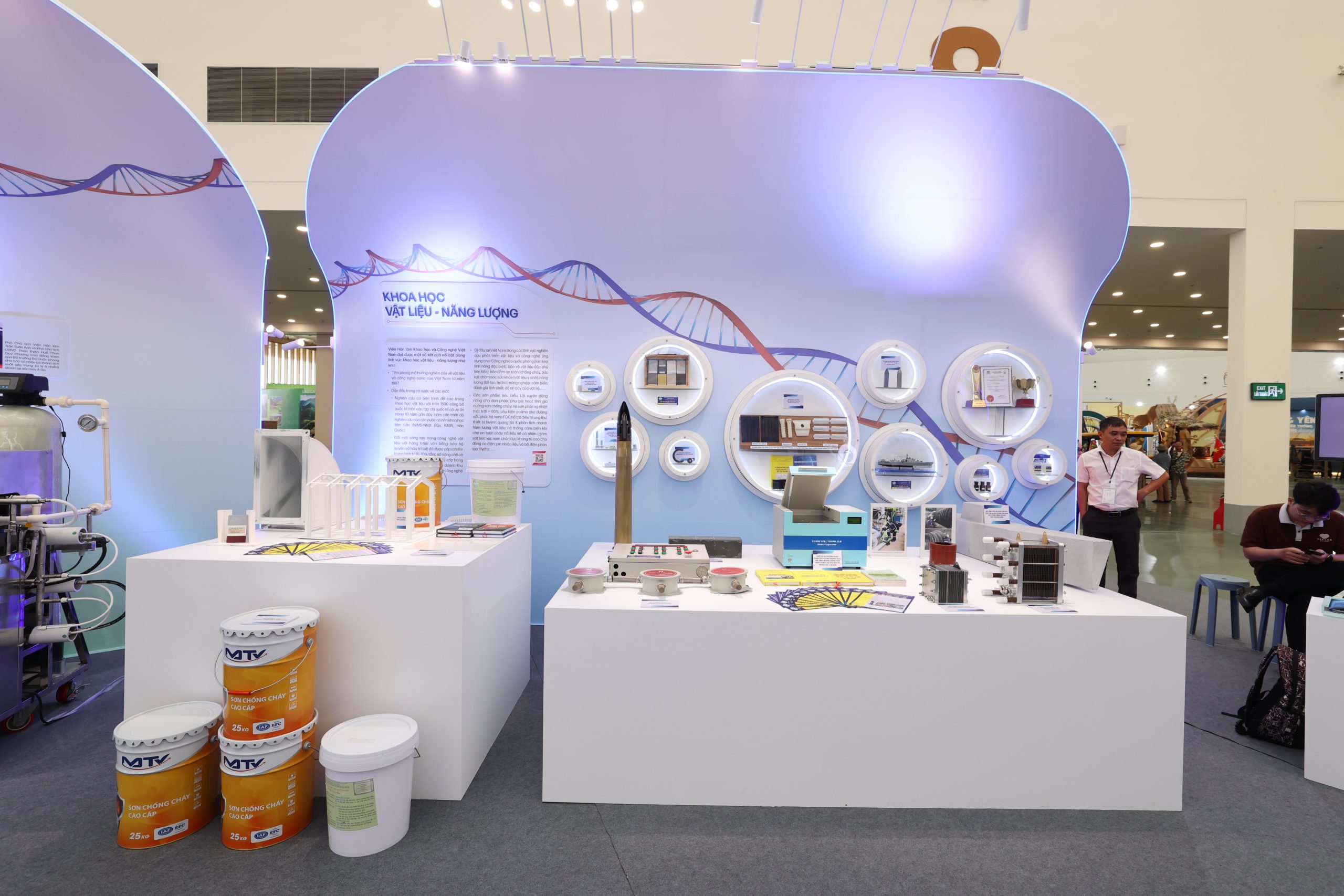
In the field of materials science, the Vietnam Academy of Science and Technology (VAST) has been a pioneer in establishing and advancing nanomaterials and nanotechnology research in Vietnam since 1997. The Academy continues to lead the nation in both high-level basic research and innovative technological applications. Over the past decade, VAST scientists have published more than 1,500 papers in prestigious international journals, achieving a research standard comparable to leading global institutions such as NIMS (Japan) and KIMS (South Korea).
VAST has consistently driven innovation in materials technology, with hundreds of intellectual property titles granted—accounting for 8–10% of all Vietnamese patents issued annually—and has successfully implemented science and technology service contracts worth hundreds of billions of VND.
The Academy has been at the forefront in Vietnam of research and development in materials and applications for multiple critical sectors, including:
-
National defense (special-performance metals),
-
Material protection (advanced coatings),
-
Safety assurance (fire- and radiation-resistant materials),
-
Healthcare (biomedical materials),
-
Energy (renewable energy and hydrogen technologies),
-
Agriculture,
-
Sensing technologies, and
-
Material property evaluation and reliability testing.
Notable products include:
-
Kinetic energy penetrator cores for artillery shells,
-
Active additives for fire-resistant coatings,
-
High solar-reflective coating systems (reflectivity >95%),
-
Polymer accessories for railway infrastructure,
-
FGC nanocomplex for cancer treatment,
-
X-ray fluorescence devices for rapid material analysis,
-
Gas-sensing systems for explosion safety,
-
Personal radiation dosimeters,
-
High-coercivity magnetic materials for electric motors, and
-
Fuel cells and proton exchange membrane water electrolyzers (PEMWE) for hydrogen production.
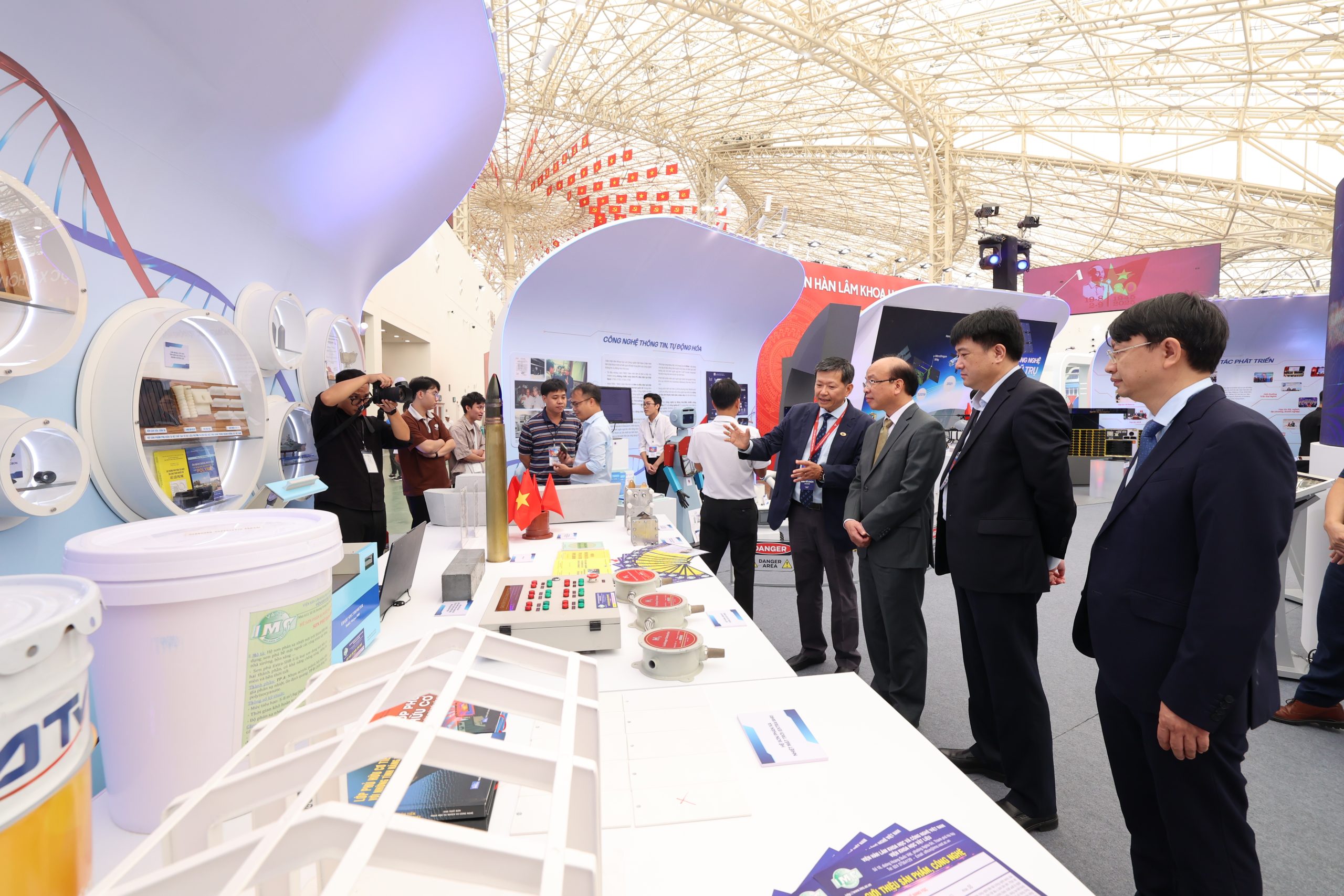
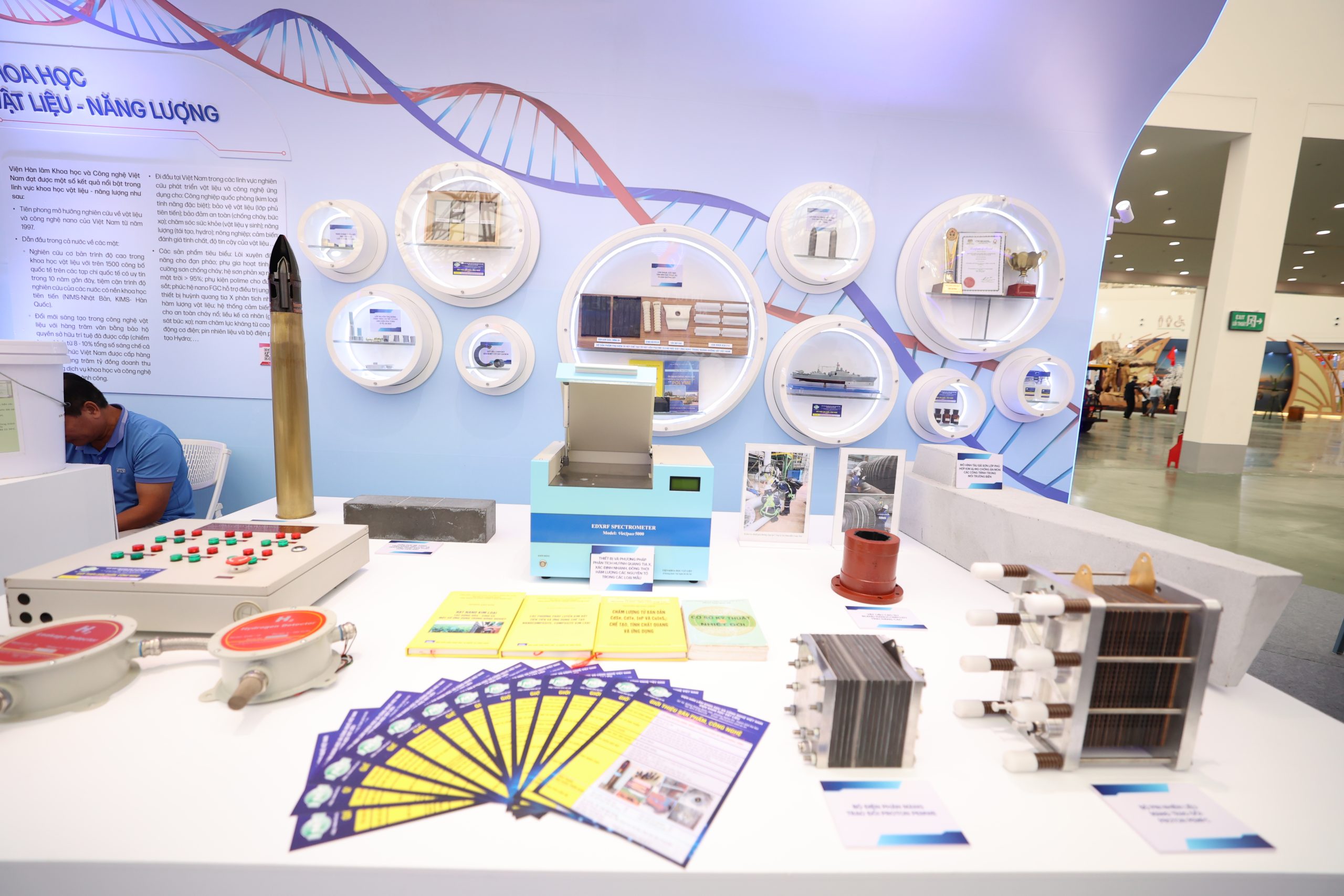
At the exhibition, the Materials and Energy section showcases:
-
A kinetic energy penetrator core for 85mm anti-tank artillery,
-
A Proton Exchange Membrane Water Electrolyzer (PEMWE) system,
-
Railway components including plastic anchors, rail clips, and rail pads,
along with other innovative material technologies.
Section: Environmental Technology
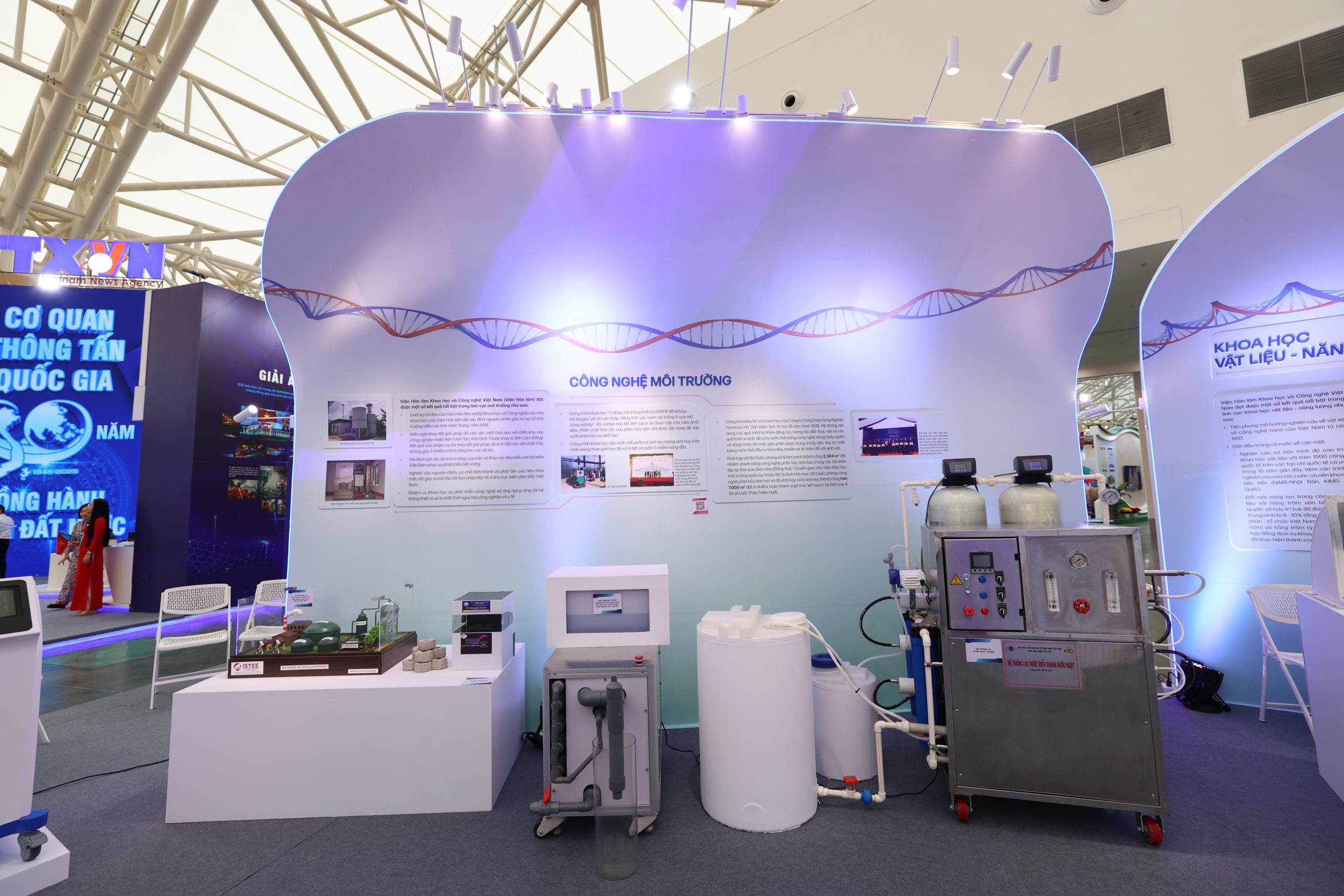
The Vietnam Academy of Science and Technology (VAST) has made major contributions to addressing critical environmental issues in Vietnam through research, technology development, and practical applications. In collaboration with the Ministry of National Defense, VAST successfully treated 3,384 m³ of dioxin-contaminated soil using biodegradation technology at burial sites in Bien Hoa Airbase (Dong Nai). The technology was subsequently transferred to the Institute of Environmental Chemistry under the Chemical Command of the Ministry of National Defense, which then applied the process to treat over 7,000 m³ of contaminated soil at A So Airbase (A Luoi, Thua Thien Hue)—exceeding the original project target.
Under the direction of VAST and the Ministry of Science and Technology, Academy scientists also played a key role in identifying the cause of the 2016 marine environmental disaster in Central Vietnam, providing the scientific basis for remediation and policy response.
VAST further contributed to national environmental management by recommending changes to the disposal plan for dredged materials from the Vinh Tan Thermal Power Industrial Zone (Binh Thuan, now Lam Dong). The adjustments in methods and dumping sites effectively prevented potential marine pollution in the project area.
Other major achievements include:
-
Environmental carrying capacity assessments of key coastal water bodies to support sustainable development;
-
Research on the causes, mechanisms, and dispersal patterns of red tide phenomena caused by toxic algal blooms in northern Vietnamese seas;
-
Development and widespread application of industrial and medical hazardous waste treatment systems.
Notable scientific projects include:
-
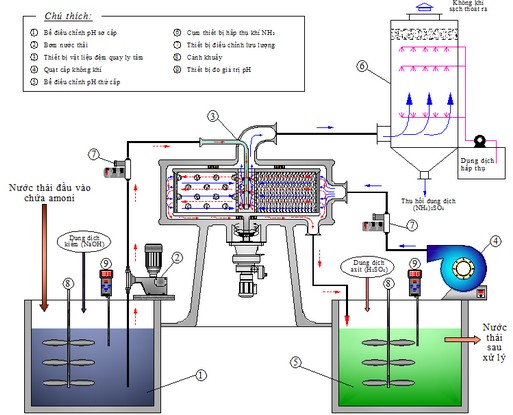
The HGRPB System, an innovative low-cost biogas purification system operating at an industrial scale. The purified methane is used to power electricity generators, while solid residues from anaerobic digestion are repurposed as organic fertilizer.
-
The development of microbial biofilm agents using biochar-based carriers to treat petroleum-contaminated soil and water.
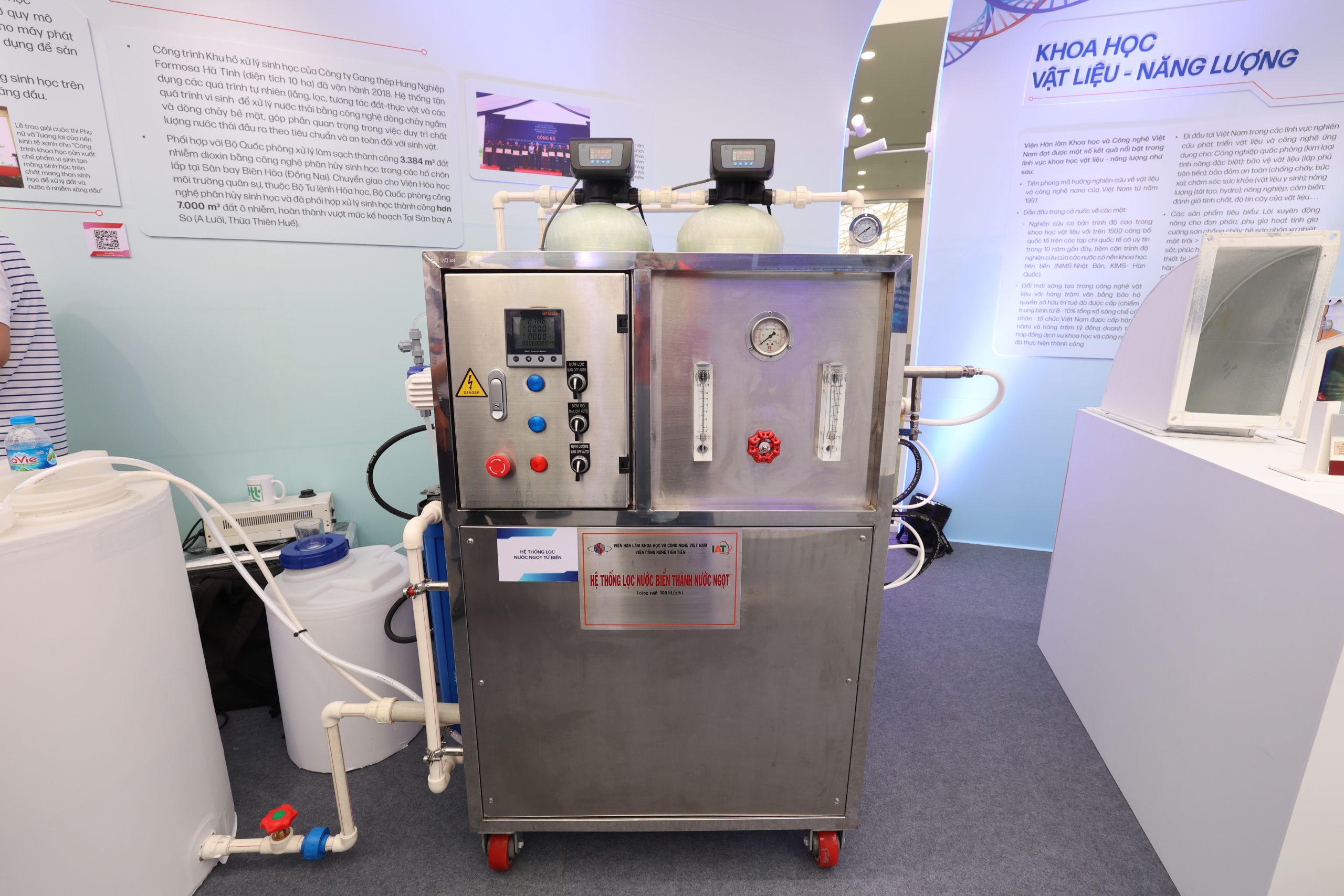
At the exhibition, the Environmental Technology section features:
-
A circular economy model from waste utilizing advanced biogas technology,
-
A seawater desalination system,
-
A cold plasma (DBD) disinfection chamber, and
-
A plasma-ultrasound hybrid system for water treatment in aquaculture.
Information Technology and Automation
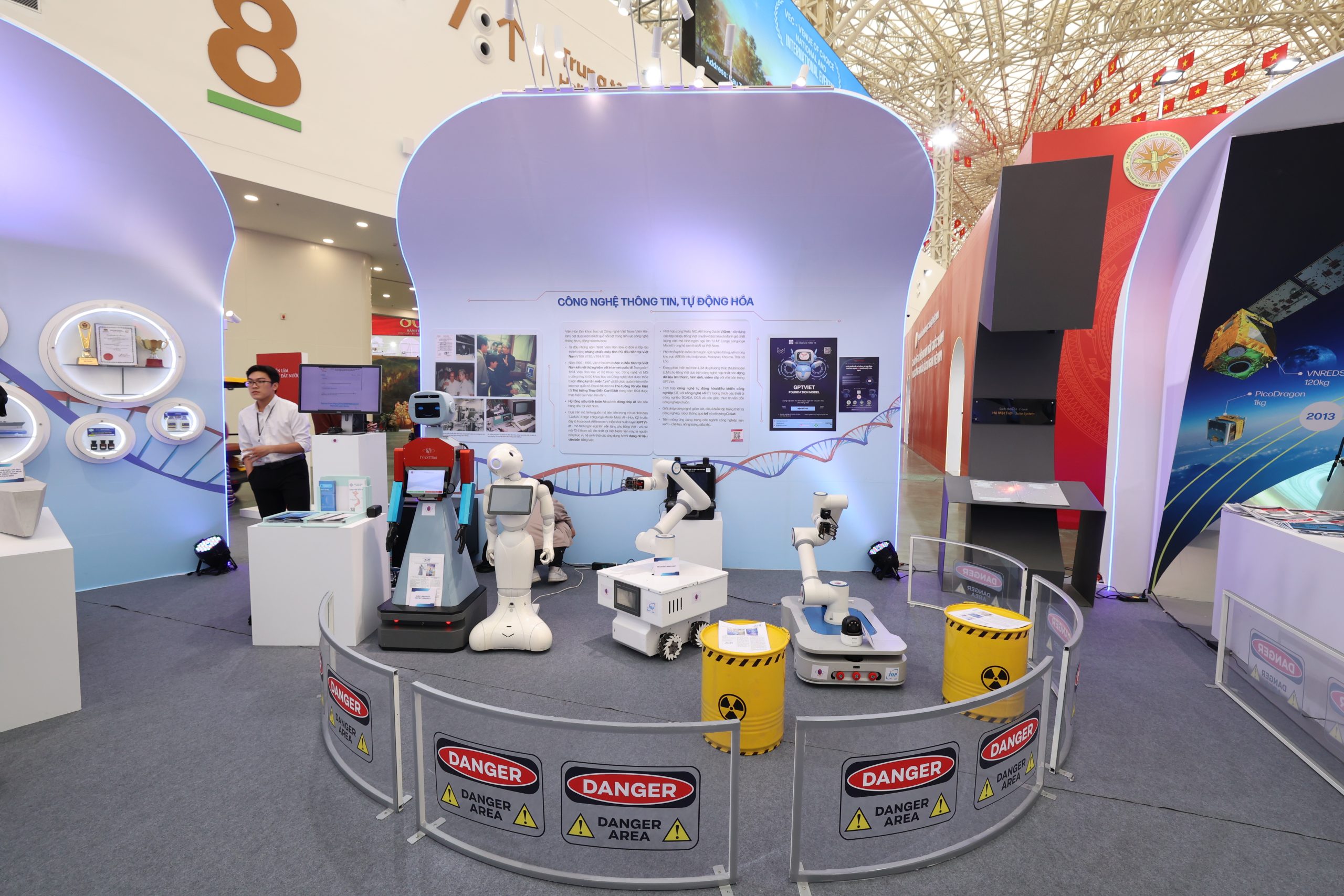
Since the early 1980s, VAST has been a pioneer in Vietnam’s computer technology, successfully assembling the country’s first personal computers—models VT80, VT83, VT84, and VT86.
In 1992–1993, VAST became the first Vietnamese institution to connect experimentally to the global Internet. In 1994, together with the Ministry of Science, Technology and Environment (now the Ministry of Science and Technology), it officially registered the national “.vn” domain with the international Internet domain authority. Notably, the first email from Vietnamese Prime Minister Võ Văn Kiệt to Swedish Prime Minister Carl Bildt was transmitted through VAST in 1994—marking a historic milestone in Vietnam’s digital integration.
In the field of artificial intelligence, VAST has taken a leading role by developing GPTViet—a 70-billion-parameter large language model (LLM) for the Vietnamese language, built upon the open-source LLaMA (Large Language Model Meta AI) framework from the United States (formerly Facebook AI Research). GPTViet is currently the largest open Vietnamese language model, serving as a foundation for AI applications across diverse text-based systems.
VAST also collaborates with Meta, NIC, and AIV in the ViGen Project to construct standardized Vietnamese language datasets and establish evaluation benchmarks for LLM quality within Vietnam’s AI ecosystem. The Academy is further developing translation software for low-resource languages in ASEAN—such as Indonesian, Malay, Khmer, Thai, and Lao—and a multimodal LLM for Vietnamese that integrates audio, image, and video data with text through GPTViet.
In automation and industrial control, VAST integrates Operational Technology (OT) and Information Technology (IT), ensuring compatibility with SCADA, DCS, and other standard industrial communication protocols. Its solutions enable centralized monitoring and control of industrial equipment and robots via IoT and Cloud platforms.
The exhibition showcases cutting-edge innovations including:
-
The AMMR Robot,
-
The Mecanum 1 robot,
-
The IVASTBot humanoid robot, and
-
The IVASTBot Version 2.0, along with various software systems for intelligent automation and robotics.
Section: Space Technology
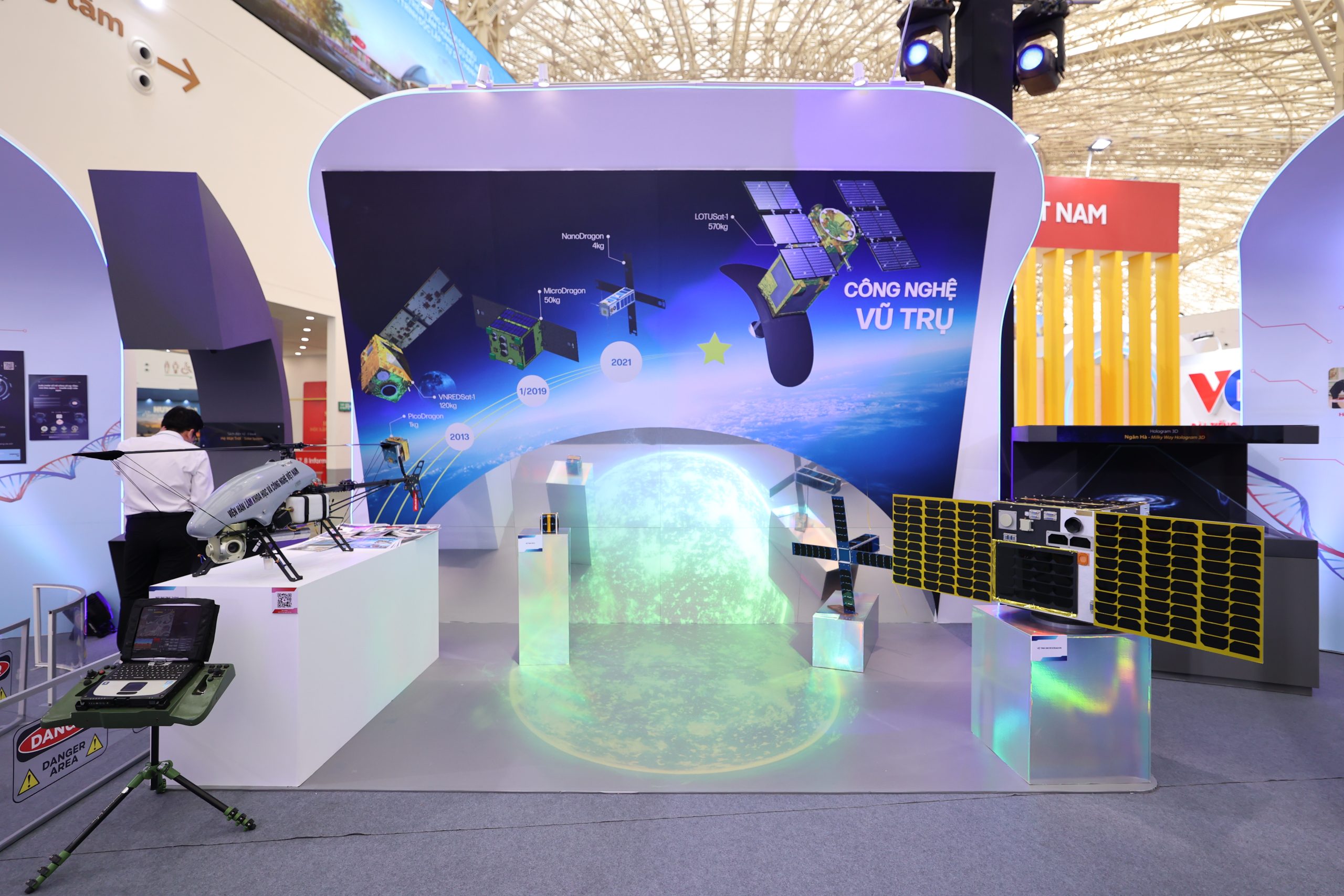
The Vietnam Academy of Science and Technology (VAST) has steadily mastered the technologies for satellite manufacturing and ground station operations. The Academy has successfully designed, built, and launched several satellites, including PicoDragon (1 kg), NanoDragon (6 kg), and MicroDragon (50 kg). Today, VAST possesses the infrastructure at Hoa Lac capable of producing satellites weighing up to 180 kilograms, marking a significant step toward Vietnam’s self-reliance in space technology.
VAST has implemented several major national satellite projects, notably developing and operating Vietnam’s first Earth Observation Satellite – VNREDSat-1. The country’s first SAR (Synthetic Aperture Radar) Earth Observation Satellite – LOTUSat-1 has now been completed and is awaiting launch. Once in orbit, LOTUSat-1 will be operated and managed by VAST, enhancing Vietnam’s capability for environmental monitoring, disaster prevention, and resource management.
The Vietnam Space Center Project, led by VAST, stands as one of the country’s largest scientific and technological initiatives. The project has established state-of-the-art infrastructure for satellite assembly, integration, and testing (AIT) and includes overseas training programs to develop Vietnam’s next generation of aerospace engineers. This foundation enables the production of “Made in Vietnam” satellites, fulfilling national strategic missions in an era where space technology is recognized as a key driver of innovation and national development.
Beyond satellite development, VAST plays a leading role in applying space technology to fundamental research, disaster prevention, environmental protection, and agricultural and forestry management, thereby supporting Vietnam’s socioeconomic growth and sustainable development.
At the exhibition, the Space Technology section features models of MicroDragon, PicoDragon, and NanoDragon satellites, as well as an unmanned helicopter, a 3D holographic imaging system, and an electronic publication display.
Cooperation and Development
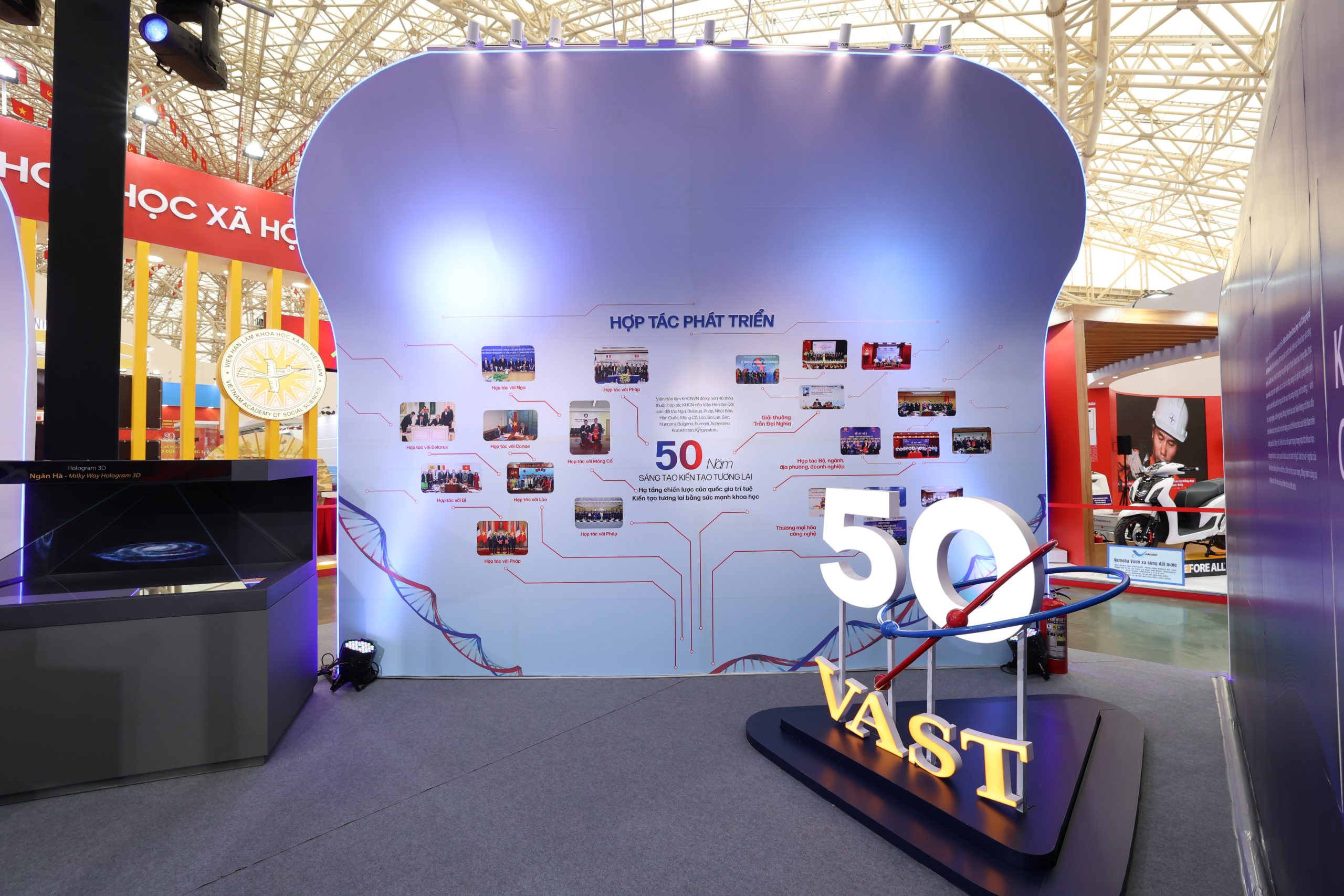
VAST continues to record strong progress in technology transfer, commercialization of research outcomes, and international cooperation. In addition to maintaining long-standing partnerships with traditional collaborators such as Russia, France, Japan, Belarus, and South Korea, the Academy has expanded its international network significantly.
In 2024, VAST established new partnerships with institutions including the Romanian Academy of Sciences, the Mongolian Academy of Sciences, the National Academy of Sciences of Kazakhstan, and the National Academy of Sciences of Kyrgyzstan. These partnerships not only promote joint research and academic exchange, but also enhance VAST’s visibility and influence within the International Association of Academies of Sciences (IAAS).
Looking ahead, VAST aims to further expand its collaboration with national academies of sciences around the world, focusing on training high-quality human resources and advancing research in strategic areas such as space technology, advanced materials, artificial intelligence, and biotechnology. The Academy identifies international cooperation as a strategic pathway for the effective implementation of Resolution No. 57-NQ/TW on the development of science, technology, innovation, and national digital transformation.
The VAST exhibition space not only showcases the Academy’s persistent journey of research and application but also serves as a powerful statement affirming that science and technology are the fundamental driving forces of Vietnam’s national development in the new era.
Some images from the VAST exhibition booth:
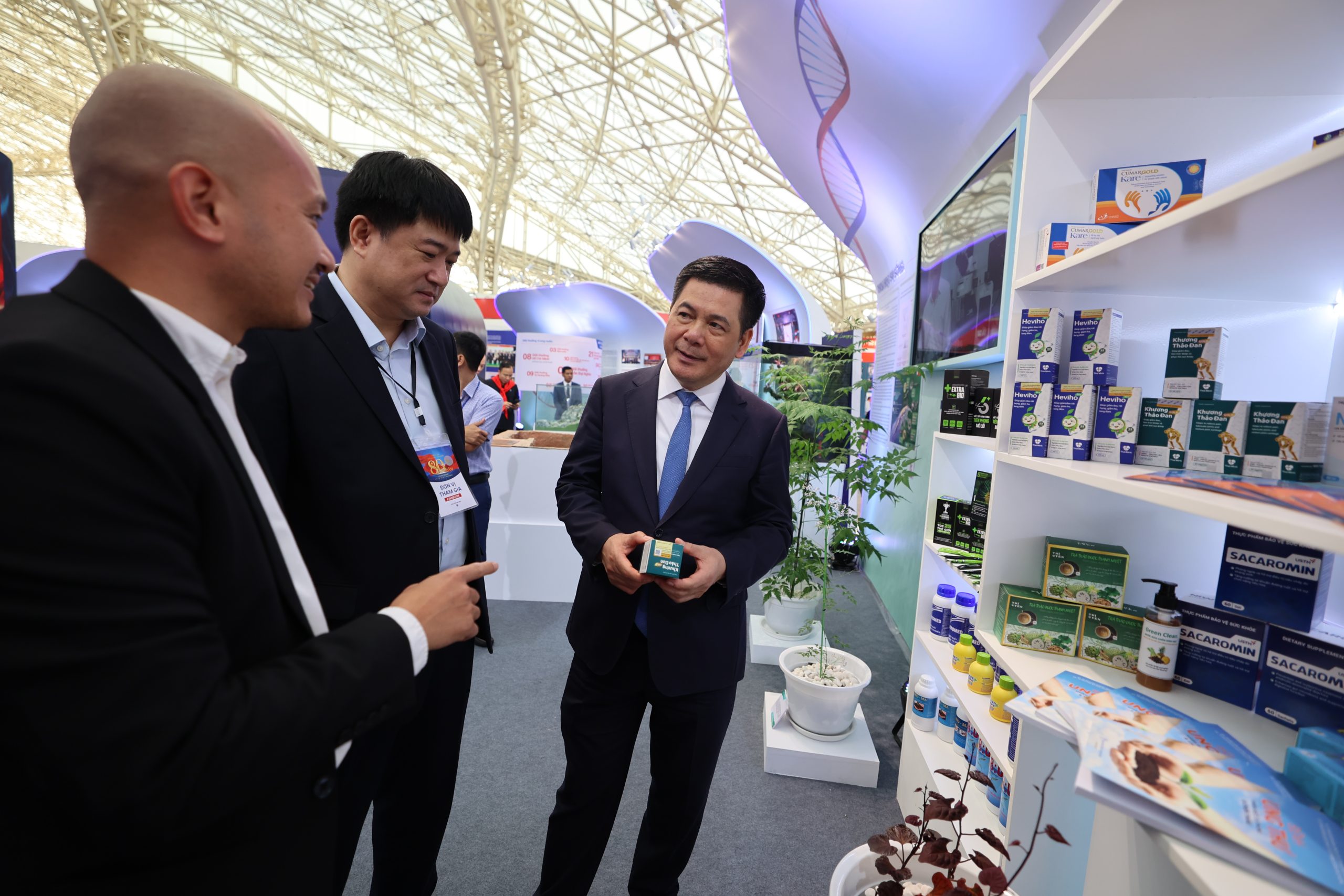
Minister of Industry and Trade Nguyễn Hồng Diên visits the exhibition booth of the Vietnam Academy of Science and Technology (VAST).
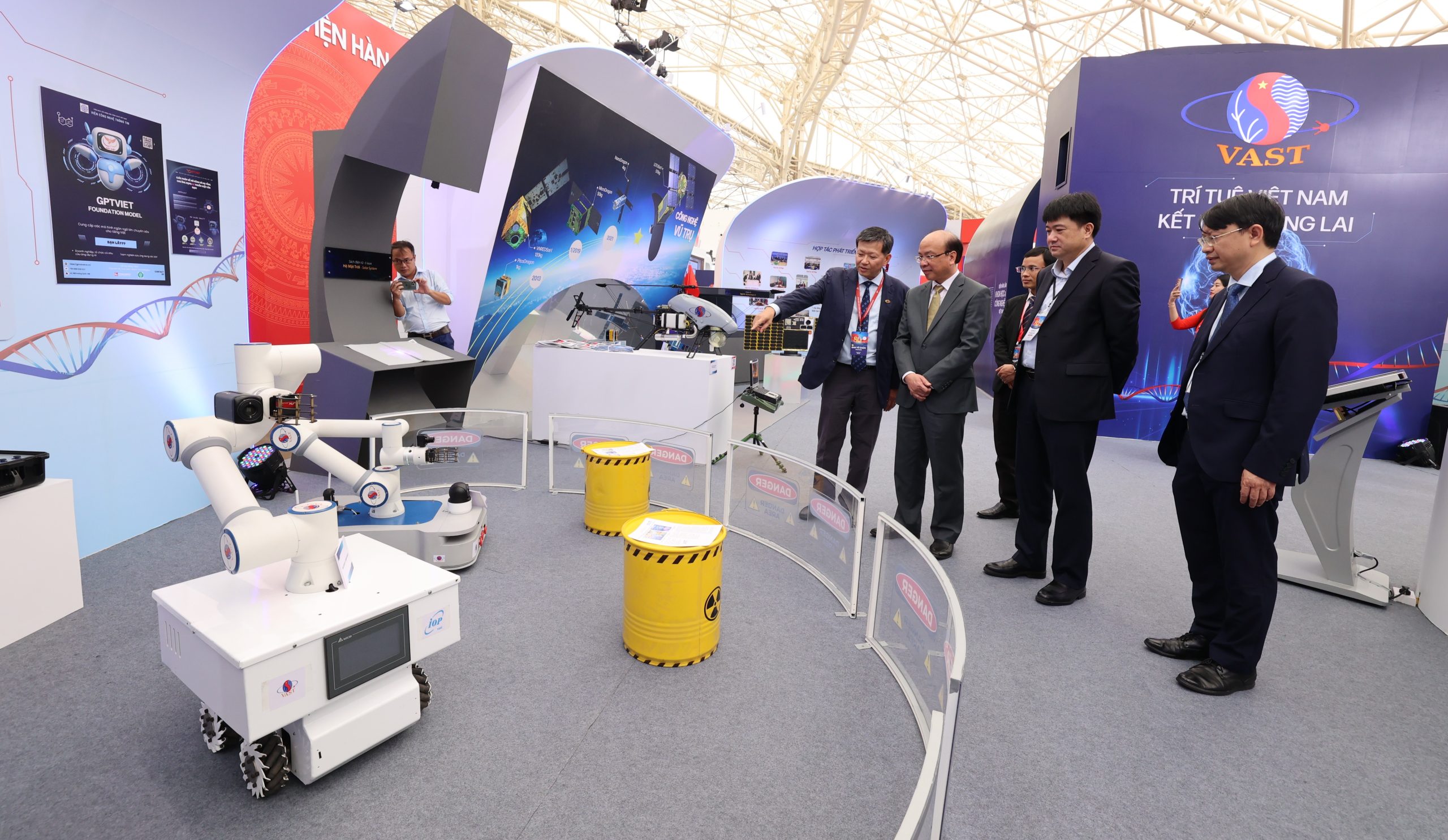
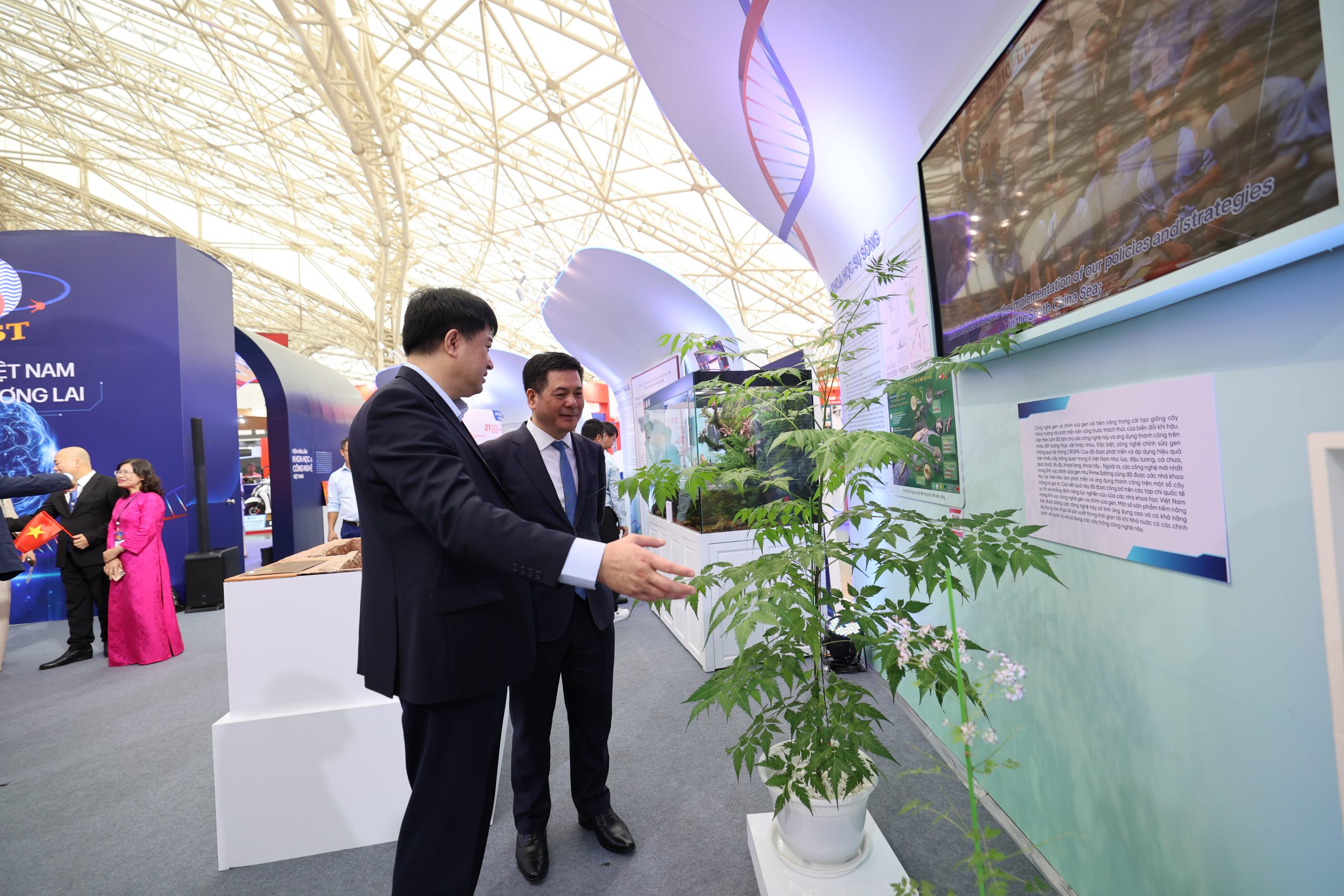
President of the Vietnam Academy of Social Sciences, Phan Chí Hiếu, visits the exhibition booth of the Vietnam Academy of Science and Technology (VAST).

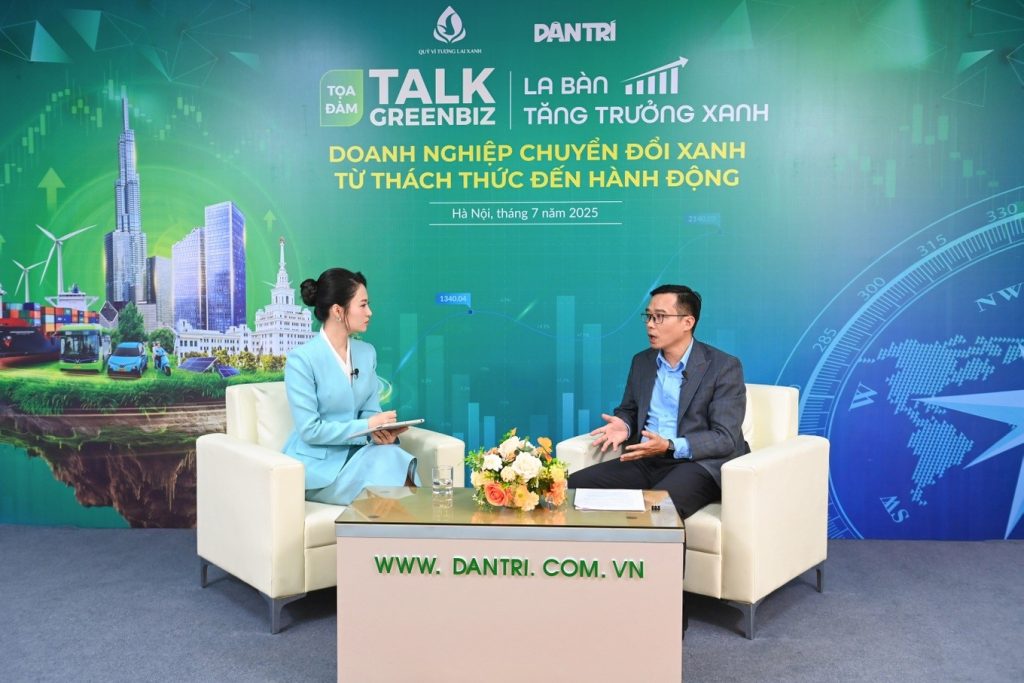
- Talk Show: Green Business Transformation – From Challenges to Action
- Hà Nội urgently seeks solutions to combat air pollution
- Introduction to The Institute of Science and Technology for Energy and Environment
- No. 57-NQ/TW, Hanoi, December 22, 2024, CENTRAL EXECUTIVE COMMITTEE RESOLUTION OF THE POLITICAL BUREAU ON BREAKTHROUGHS IN THE DEVELOPMENT OF SCIENCE, TECHNOLOGY, INNOVATION, AND NATIONAL DIGITAL TRANSFORMATION
- Announcement of the Kurita Fund on Water and Environment for young researchers in 2024